nuancedTheology · A lesson for your family
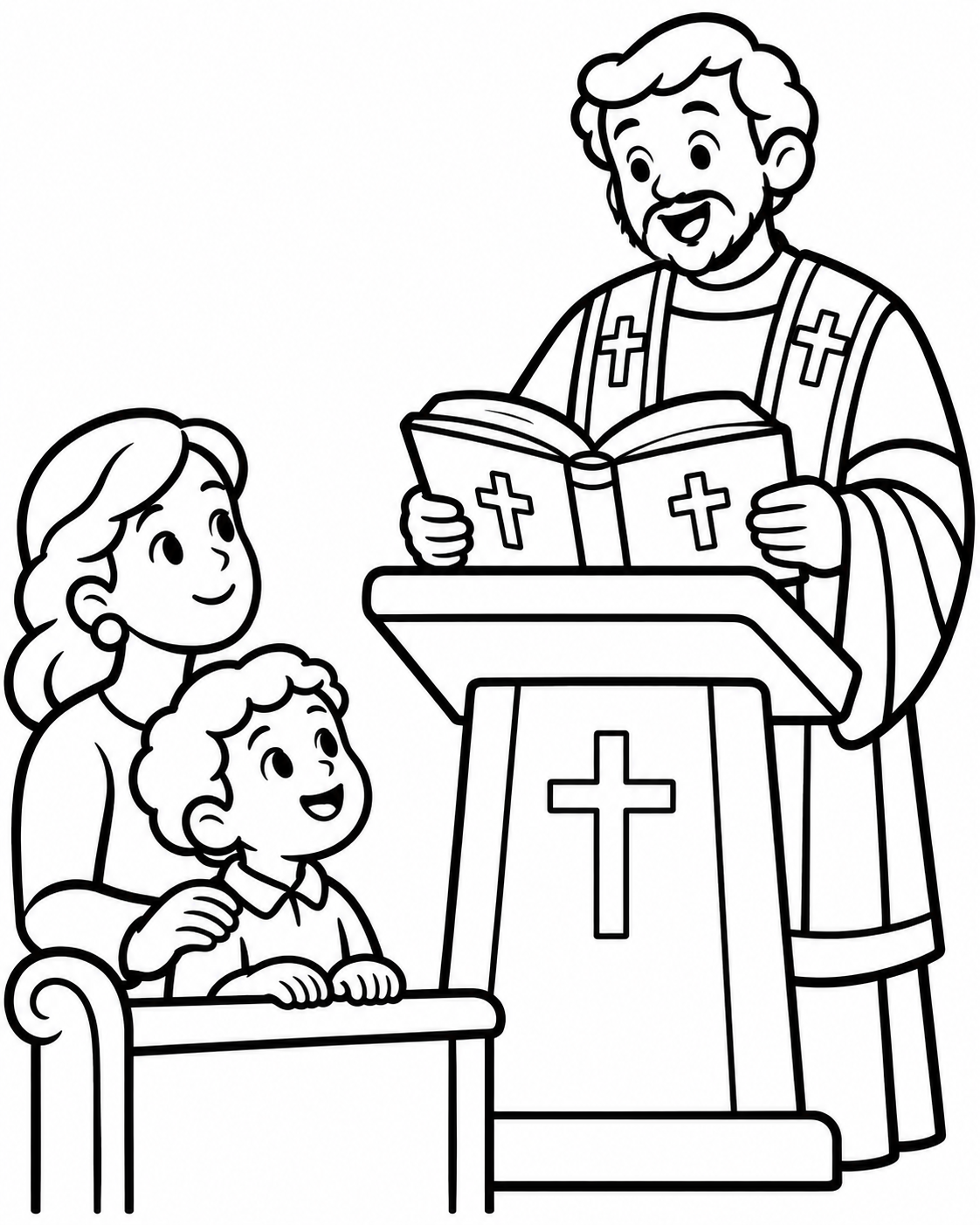
Why do we stand for the Gospel?
Gather together. Read aloud. Leave room for little questions.
Read God’s Word
Jesus stands to read Scripture in the synagogue. Listen for the good news he announces. This story helps us value God’s word as we learn the gestures used for the Gospel at Mass.
Luke 4:16–21 · Douay-Rheims Bible
16 And he came to Nazareth, where he was brought up: and he went into the synagogue, according to his custom, on the sabbath day: and he rose up to read.
17 And the book of Isaias the prophet was delivered unto him. And as he unfolded the book, he found the place where it was written:
18 The spirit of the Lord is upon me. Wherefore he hath anointed me to preach the gospel to the poor, he hath sent me to heal the contrite of heart,
19 To preach deliverance to the captives and sight to the blind, to set at liberty them that are bruised, to preach the acceptable year of the Lord and the day of reward.
20 And when he had folded the book, he restored it to the minister and sat down. And the eyes of all in the synagogue were fixed on him.
21 And he began to say to them: This day is fulfilled this scripture in your ears.
Wonder together What good news do you hear in Jesus’ reading?
Let’s Learn
Read aloud together · about 5 minutes
Someone worth listening to
At Mass, we usually sit for the readings before the Gospel. Then we stand and sing Alleluia to welcome Christ, who speaks to us in the Gospel. During Lent, we sing the verse before the Gospel given in the Lectionary in place of Alleluia. The words can change from one Sunday to the next. This change of posture helps us recognize a special moment: we are about to hear from one of the four Gospels, which tell us about Jesus’ life, teaching, death, and Resurrection.
All Scripture proclaimed at Mass deserves our attention. Standing for the Gospel does not make the other readings unimportant. It is one way the liturgy, the Church’s public worship, gives particular honor to reading the Gospel aloud.
Good news for us now
Gospel means good news. At Mass, a deacon or priest reads it aloud to everyone; this is what we mean by proclaiming the Gospel. The Church teaches that Christ speaks to his people when the Scriptures are read in the liturgy. We listen to an account from long ago, and we also listen as people whom the living Lord calls today.
In Mark’s Gospel, Jesus announces God’s kingdom and calls fishermen to follow him. We may hear a healing, a parable, or an encounter with someone who needs mercy. Each passage invites attention to who Jesus is and how we can respond to him.
Listen with your whole self
You do not need to understand every word immediately. Try to notice one action or sentence. Later, ask a parent what it means, or read the passage together.
If standing is painful or impossible, remain seated and listen with love. A posture helps express reverence; it is not a measure of someone’s faith. Jesus’ invitation reaches people of every age and ability.
Gospel Acclamation
Listen for on Sunday Alleluia, or the verse before the Gospel in Lent.
Talk about it What did the verse help you notice about Jesus before the Gospel?
nuancedTheology · Why do we stand for the Gospel?
Let’s Talk
What does standing help us notice?
For parents: That we are welcoming the Gospel with particular reverence.
What did Jesus invite people to do in Mark’s Gospel?
For parents: Follow him. Explore what following could mean for a child today.
What could you do if a Gospel passage is confusing?
For parents: Ask a trusted adult and read it together; questions are welcome.
Let’s Remember
We stand to honor Christ and listen to his good news.
Let’s Practice
At the next Mass, listen for one action of Jesus in the Gospel. Share what you noticed afterward without making it a test.
Let’s Pray
Jesus, open our ears and hearts. Help us hear your good news and follow you. Amen.
For Parents
Optional further reading:
General Instruction of the Roman Missal 29, 60, 62–63 www.usccb.orgbible.usccb.org
Find more references alongside each section of the article.
Use the Scripture and Catechism references above to find the passages in a Bible or a copy of the Catechism.
Original educational lesson · Version 2 · 2026-10-24
Drafted · Awaiting theological review. No ecclesiastical approval is claimed.