nuancedTheology · A lesson for your family
Understanding the readings and praying together
Gather together. Read aloud. Leave room for little questions.
Read God’s Word
The risen Jesus helps two disciples understand Scripture and shares a meal with them. Listen for how they describe what happened in their hearts.
Luke 24:27–32 · Douay-Rheims Bible
27 And beginning at Moses and all the prophets, he expounded to them in all the scriptures the things that were concerning him.
28 And they drew nigh to the town whither they were going: and he made as though he would go farther.
29 But they constrained him, saying: Stay with us, because it is towards evening and the day is now far spent. And he went in with them.
30 And it came to pass, whilst he was at table with them, he took bread and blessed and brake and gave to them.
31 And their eyes were opened: and they knew him. And he vanished out of their sight.
32 And they said one to the other: Was not our heart burning within us, whilst he spoke in the way and opened to us the scriptures?
Wonder together How did the disciples feel as Jesus helped them understand?
Want to read more?
Let’s Learn
Read aloud together · about 5 minutes
A word for the life we live
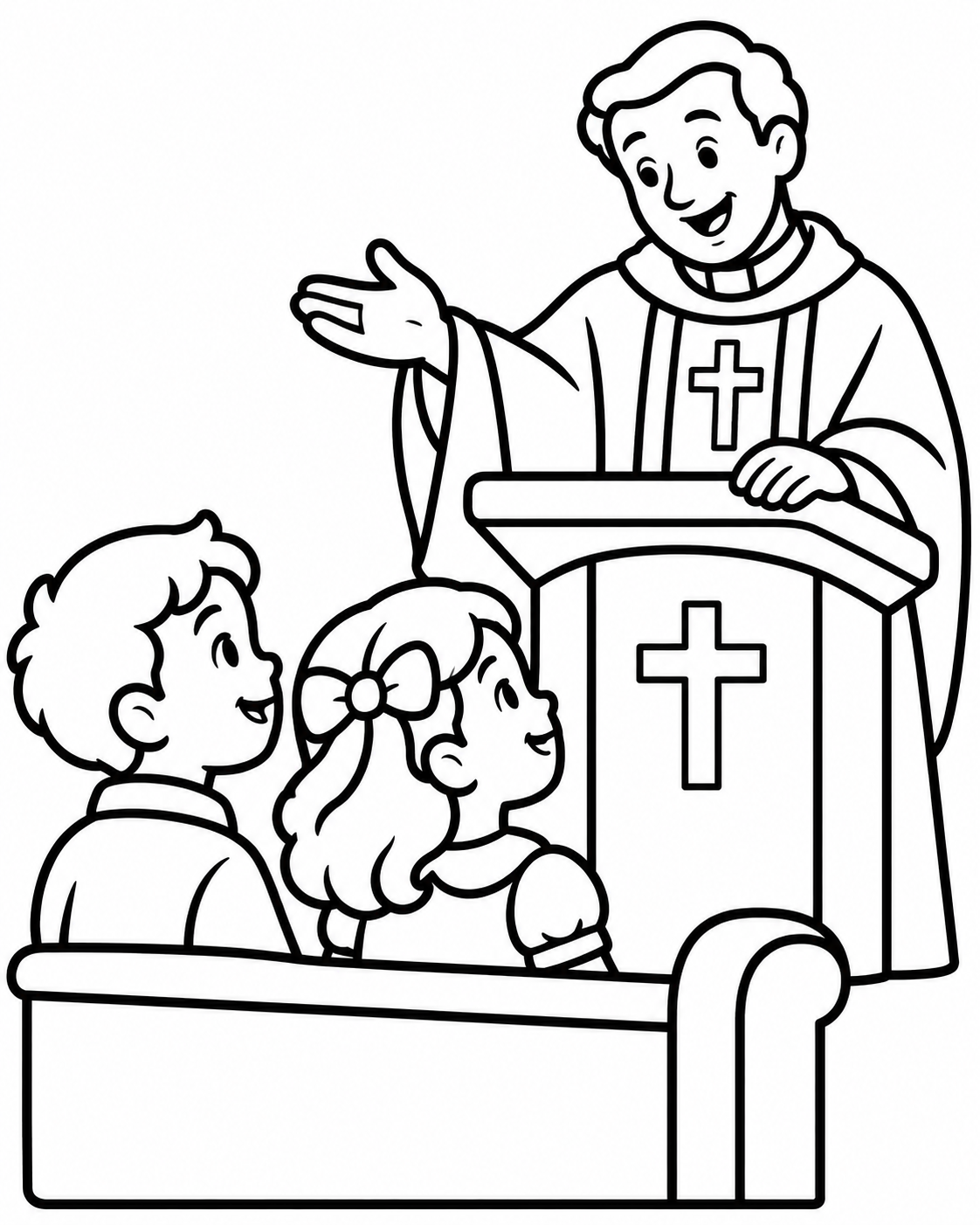
After the Gospel, a priest or deacon explains the readings or another text from the Church’s worship. This explanation is the homily; it helps us live what we hear. A homily is required at Mass with a congregation on Sundays and holy days of obligation, unless a very serious reason prevents it; it is recommended on other days. The preacher invites us to connect what we hear with life in Christ. It is more than a speech about being pleasant or a break for announcements.
A child might understand one example without following every sentence. Listen for a thought you can ask about later. Parents can help by discussing a hopeful or challenging point rather than turning the ride home into a test.
We profess the faith together
We state together what the Church believes in a prayer called the Creed, meaning a profession of faith. Ordinarily, it is said or sung on Sundays and solemnities, the Church’s most important celebrations, and may be used on other special occasions. We profess the faith of the Church together, including truths we are still learning to understand. The Nicene Creed and, in permitted use, the Apostles’ Creed give words to that shared faith.
Saying the Creed does not mean we have no questions. It gives us a place to begin asking them. A difficult word can become the start of another family conversation about the Father, Son, Holy Spirit, or the Church.
Our prayer reaches beyond ourselves
We then pray for people beyond ourselves. This is the Universal Prayer, also called the Prayer of the Faithful: universal reminds us to include the needs of the Church and the world. Intercession means asking God to help others. Scripture encourages intercession for all people, including those with public responsibility.
We can bring a personal intention while learning to pray for those far beyond our household. Someone we will never meet may need peace, food, healing, or justice. Hearing the Word should widen our love. Our response can continue after Mass through a concrete act of care.
nuancedTheology · Understanding the readings and praying together
Let’s Talk
What does the homily help us do?
For parents: Receive the meaning of Scripture and the liturgy for life with Christ.
Can we still ask questions while learning the Creed?
For parents: Yes. Honest questions can help us understand the faith we profess.
Who beyond our family needs prayer?
For parents: Name a community or group without sharing private information.
Let’s Remember
We answer God’s Word with faith, prayer, and a love that reaches beyond ourselves.
Let’s Practice
Choose one unfamiliar word from the Creed to explore with a parent. Pray for one need mentioned in the Universal Prayer.
Let’s Pray
God of all people, deepen our faith. Hear the needs of your Church and your world, and teach us to serve. Amen.
For Parents
Optional further reading:
USCCB · Liturgy of the Word www.usccb.orgbible.usccb.org
Find more references alongside each section of the article.
Use the Scripture and Catechism references above to find the passages in a Bible or a copy of the Catechism.
Original educational lesson · Version 2 · 2026-10-24
Drafted · Awaiting theological review. No ecclesiastical approval is claimed.